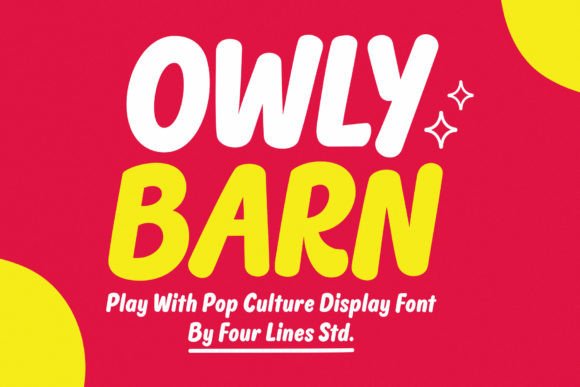
Owly Barn: Designing Joy Through Versatile Visual Identity
In the crowded landscape of modern branding, where minimalism often borders on sterility, there is a growing demand for visual identities that evoke genuine emotion. Enter Owly Barn, a design concept that has quietly become a staple for creatives seeking to infuse their projects with warmth and approachability. At its core, Owly Barn is not just a logo or a static image; it is a dynamic visual system characterized by its distinctive rounded corners and organic flow. These soft edges are not merely aesthetic choices; they are psychological triggers that communicate joy, positivity, and safety to the viewer.
For graphic designers, marketers, and business owners, understanding the utility of such a versatile asset is crucial. The rounded corners of Owly Barn give it a sense of joy and positivity, distinguishing it from sharper, more aggressive geometric designs. This article explores how this specific design philosophy can be leveraged across various mediums, ensuring that your brand message remains consistent, engaging, and effective regardless of the platform.
The Psychology of Soft Edges in Branding
Why do rounded corners matter? In design theory, sharp angles are often associated with danger, urgency, or high energy. Think of warning signs or fast-paced action movie posters. Conversely, curves and rounded shapes are processed by the human brain as friendly, safe, and inviting. When you integrate Owly Barn into your visual strategy, you are tapping into this innate psychological response.
The seamless adaptation of Owly Barn to different sizes and resolutions is a testament to its robust design foundation. Whether it is shrunk down to a favicon on a browser tab or expanded to cover a billboard, the integrity of the shape remains intact. This scalability ensures that the feeling of "joy" is never lost in translation. For professionals who prioritize user experience (UX), this is invaluable. A brand that feels approachable at every touchpoint fosters trust, and trust is the currency of modern commerce.
Adaptability Across Digital and Print Mediums
One of the most compelling features of Owly Barn is its chameleon-like ability to fit into diverse environments. In today’s omnichannel marketing world, a brand must exist simultaneously on social media feeds, mobile apps, physical packaging, and corporate stationery. Many design elements fail when transferred from screen to paper due to resolution issues or color profile mismatches. However, Owly Barn adapts seamlessly.
- Digital Applications: On websites and apps, the vector-based nature of Owly Barn ensures crisp rendering on Retina displays and high-DPI screens. It loads quickly and maintains clarity, contributing to better performance metrics.
- Print Media: For brochures, business cards, and large-format prints, the design holds its structural integrity. The lack of intricate, fragile details means that even lower-quality printing processes can reproduce the logo effectively without losing its essence.
This versatility makes it a go-to choice for graphic designers who need a reliable asset that reduces production headaches. Instead of creating multiple variations for different use cases, designers can rely on the core Owly Barn structure to perform consistently.
Who Benefits from Using Owly Barn?
While the aesthetic appeal of Owly Barn is universal, certain groups stand to gain significantly more from its implementation. Understanding who benefits most can help you decide if this design direction aligns with your project goals.
- Startups and Tech Companies: New entrants in the market often struggle to appear trustworthy. The friendly demeanor of Owly Barn helps soften the perceived complexity of tech products, making them feel more accessible to non-technical users.
- Educational Platforms: Learning environments thrive on positivity. The joyful connotations of the design create a welcoming atmosphere for students and lifelong learners.
- Health and Wellness Brands: In industries focused on care, healing, and mental well-being, aggressive branding can be counterproductive. Owly Barn’s soft lines reinforce messages of comfort and support.
- Creative Agencies: For agencies looking to showcase their ability to blend fun with professionalism, using or recommending such a versatile identity system demonstrates a deep understanding of contemporary design trends.
Real-World Scenarios and Applications
To truly appreciate the value of Owly Barn, let us look at how it functions in practical scenarios. Consider a mobile application for a meditation service. The interface needs to be calming. If the app icon features harsh, jagged lines, it creates subconscious tension. By utilizing the rounded, positive forms of Owly Barn, the icon invites the user to relax before they even open the app.
Another example can be found in retail packaging. Imagine a line of organic children’s snacks. Parents are cautious about what they feed their kids. A package design that incorporates the Owly Barn aesthetic signals safety and natural goodness. The design does not shout; it whispers reassurance. This subtle communication is powerful because it bypasses logical scrutiny and appeals directly to emotional decision-making.
Furthermore, in corporate presentations, slide decks often suffer from visual fatigue. Integrating Owly Barn elements as background motifs or bullet point markers can break up text-heavy slides, adding a layer of visual interest that keeps the audience engaged without distracting from the core data.
Evaluating Suitability: Is Owly Barn Right for You?
While the advantages are clear, it is essential to approach any design choice with critical evaluation. Not every brand narrative benefits from overt positivity. There are considerations and limitations to keep in mind.
When to Use It: If your brand values include community, accessibility, innovation, and care, Owly Barn is an excellent fit. It works particularly well for B2C (Business to Consumer) companies where emotional connection drives purchasing decisions.
When to Reconsider: If your brand relies on projecting authority, exclusivity, or extreme precision (such as high-end luxury fashion or heavy industrial machinery), the "joyful" aspect of Owly Barn might dilute your message. In these cases, the softness could be misinterpreted as a lack of seriousness or rigor.
Practical Expectations: Implementing Owly Barn requires more than just slapping a logo on a website. To maximize its impact, the surrounding design elements—typography, color palette, and imagery—must harmonize with its rounded, friendly nature. Pairing it with harsh, industrial fonts, for instance, would create visual dissonance. Consistency is key.
Maximizing Value for Creatives and Marketers
For graphic designers and marketers, Owly Barn represents a tool for efficiency and effectiveness. Its adaptability reduces the time spent on resizing and reformatting assets. More importantly, it provides a cohesive visual language that can scale with the business. As a company grows, the brand identity must remain recognizable. The simple yet distinct nature of Owly Barn ensures that it remains memorable even as the product lineup expands.
Moreover, in an era where digital accessibility is paramount, the high contrast and clear shapes associated with this style of design can aid users with visual impairments. Clear, bold forms are easier to distinguish than intricate, low-contrast details. By choosing a design like Owly Barn, you are inadvertently supporting inclusive design practices.
Conclusion: Embracing Versatility and Joy
In conclusion, Owly Barn offers more than just a pretty face. It is a strategic design asset that combines psychological insight with technical versatility. The rounded corners give it a sense of joy and positivity, making it an ideal candidate for brands that wish to connect with their audience on an emotional level. Its ability to adapt seamlessly to different sizes and resolutions ensures that this message remains clear whether viewed on a smartwatch or a highway billboard.
For general consumers, it creates a sense of familiarity and trust. For professionals, it offers a reliable, flexible framework for building brand identity. As we move forward in a digital-first world, the need for designs that are both functional and emotionally resonant will only grow. Owly Barn stands as a prime example of how thoughtful design can bridge the gap between utility and delight. Whether you are a startup founder, a seasoned marketer, or a creative designer, considering the integration of such versatile, positive design elements could be the key to unlocking deeper engagement with your audience.